
The Best Places to Launch Your SaaS in 2026, Ranked by What Actually Works
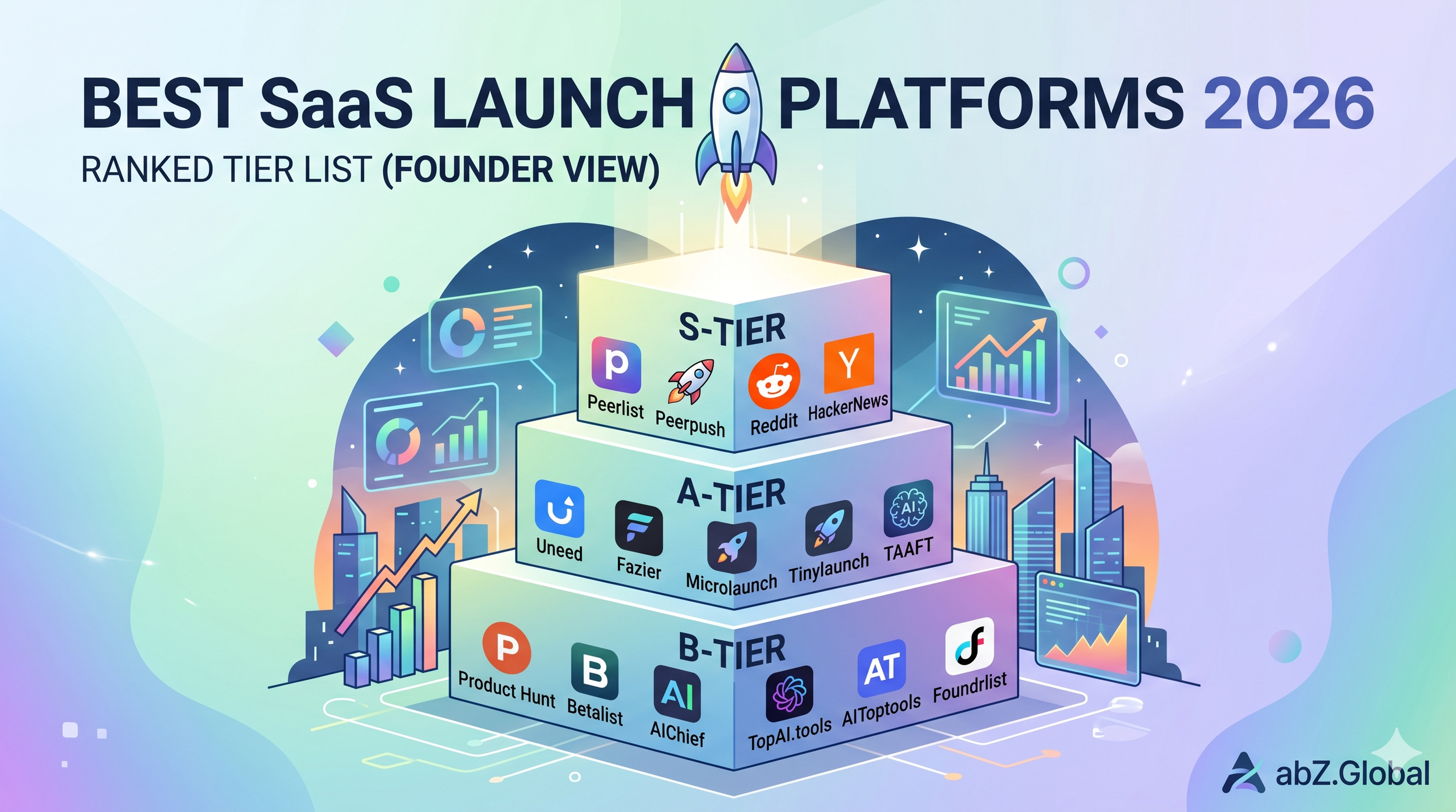
I spent the last few weeks launching SelfManager.ai across every credible SaaS launch platform I could find. Paid ones, free ones, AI directories, indie hubs, Reddit, HackerNews, the whole circuit.
Most launch advice online is either outdated or written by someone trying to sell you a listing. So here's the version I wish I had before I started.
This is a tier list. Ranked by actual usefulness for an indie SaaS in 2026, not by how loud the platform markets itself.
A quick note on what "worth it" means here
I'm ranking based on three things: traffic quality, signup intent, and compounding value (backlinks, SEO, social proof). A platform can send you 2,000 visitors and be useless. Another can send you 80 visitors and convert three into paying users. I care about the second one.
I'm also separating paid from free, because the economics matter if you're bootstrapping.
S-Tier: Launch here first
Peerlist
Free. Strong signal-to-noise ratio. The audience is builders, designers, and founders who actually click through and try things. Your launch shows up in a feed that's genuinely read, not just scrolled past.
Peerlist also gives you a permanent product page that ranks reasonably well and looks professional when you share it elsewhere.
Peerpush
Paid. This one surprised me the most. It's quietly become one of the better traffic sources for indie SaaS, partly because it cross-promotes to other indie products and builders end up in a real network effect. The ROI per dollar is good if your landing page converts.
Reddit (done properly)
Free. Reddit is the highest-leverage free channel in 2026 if you don't post like a founder.
The rule: no launch announcements, no "check out my new app" posts. Write something useful from your actual experience, mention your tool once, in context, where it genuinely fits. That's it. The subreddits that work depend on your niche. For SelfManager, r/productivity and r/ProductivityApps pulled real signups. For a dev tool, it would be different.
If you treat Reddit like a billboard, it will ignore you or ban you. If you treat it like a conversation, it pays off for months because posts rank on Google too.
HackerNews (Show HN)
Free. Low hit rate, very high ceiling. One good Show HN can outperform every paid directory combined.
The catch: you get one real shot. Make sure your landing page, pricing, and demo are ready. Post mid-morning US time on a weekday. Don't ask friends to upvote, HN detects it. Just ship and engage honestly in the comments.
A-Tier: Worth your time, usually worth the money
Uneed
Solid traffic, fair pricing, and the listing has SEO value that compounds. The audience skews toward founders and product people. Good fit for most SaaS.
Fazier
Similar vibe to Uneed but with its own audience. Worth doing both. I'd call Fazier slightly more focused on maker-style products, but the overlap in value is real.
Microlaunch
Cheap, effective, reliable. Not flashy, but the kind of platform that sends you a steady trickle and a clean backlink. Good for founders who want to fire and forget.
Tinylaunch
Same tier, same general reasoning. Small effort, small-but-real payoff, decent SEO value.
TAAFT (There's An AI For That)
Paid. If your product has an AI component, this is non-negotiable. The traffic is huge and the audience is specifically looking for AI tools. The catch is that competition inside the directory is fierce, so your positioning and screenshots matter more than the listing itself.
If your product doesn't have AI in it, skip this entirely. Don't stretch the definition.
B-Tier: Do them, but don't expect fireworks
Product Hunt
Free. I know this will be controversial, but Product Hunt in 2026 is not what it was in 2020. The launch-day traffic windfall is mostly gone for indie SaaS unless you have an existing audience to mobilize.
That said, it's still worth doing once. You get a decent backlink, a permanent product page, and the social proof of being "featured on Product Hunt" still opens doors. Just don't build your whole launch plan around it. It's a nice-to-have, not the main event.
Betalist
Paid. Used to be a must-do. Now it's a maybe. The pricing has crept up and the traffic quality varies. Worth it if your product fits their aesthetic and audience, skip if you're on a tight budget.
AIChief
Paid, AI-only. Decent backlink, modest traffic, fine if you're already paying for AI directories. Not where I'd start.
TopAI.tools
Paid, AI-only. Mostly a backlink play. Traffic is thin. Worth it only as part of a broader AI directory push.
AIToptools
Similar story. Paid listing, backlink value, low direct traffic. Don't expect users, expect SEO juice.
Foundrlist
Small but growing. The kind of platform where being early can pay off. Low effort to list.
What's missing from this list (and why it shouldn't be)
Here's where most launch lists get lazy. They list directories and forget the free channels that actually convert.
Indie Hackers
Post a milestone, a technical deep-dive, or a lessons-learned post. Not a launch announcement. The community responds to substance.
X (Twitter)
A launch thread is still one of the highest-leverage free things you can do, even with a small follower count. The algorithm rewards threads that spark replies. Write it like a story, not like a press release.
Underrated for B2B SaaS. A founder post about why you built the product, written in plain language, tends to outperform polished marketing copy.
G2, Capterra, GetApp
Not launch platforms in the traditional sense. But if you're B2B, getting listed and slowly accumulating reviews compounds over years. Start early even if you only have a few users.
The order I'd actually recommend for a new SaaS
If I were starting over with SelfManager.ai tomorrow, here's the sequence I'd follow:
Week one: Peerlist, Microlaunch, Tinylaunch, Fazier, Uneed. All cheap or free, all give you backlinks and a bit of traffic to warm up analytics.
Week two: Reddit posts (real, useful ones), an X launch thread, a LinkedIn founder post, Indie Hackers.
Week three: Product Hunt, ideally with an audience warmed up from the first two weeks.
Week four: HackerNews Show HN, once everything is polished and you've ironed out onboarding issues from early traffic.
If you have AI in the product, slot TAAFT into week one and the smaller AI directories into week three.
The real takeaway
Launch platforms are not a growth strategy. They're a seeding mechanism. They give you early traffic, early feedback, early backlinks, and a small number of early users. The actual growth comes from what you do with those people and what you build in the following months.
The founders who get the most out of launch platforms are the ones who treat them as a starting line, not a finish line. List everywhere that makes sense, don't overpay, and don't expect any single platform to change your life.
Then get back to building.