
Lovable Launches a Native Desktop App and Pushes AI App Building Closer to the Operating System
Lovable has taken an important next step.
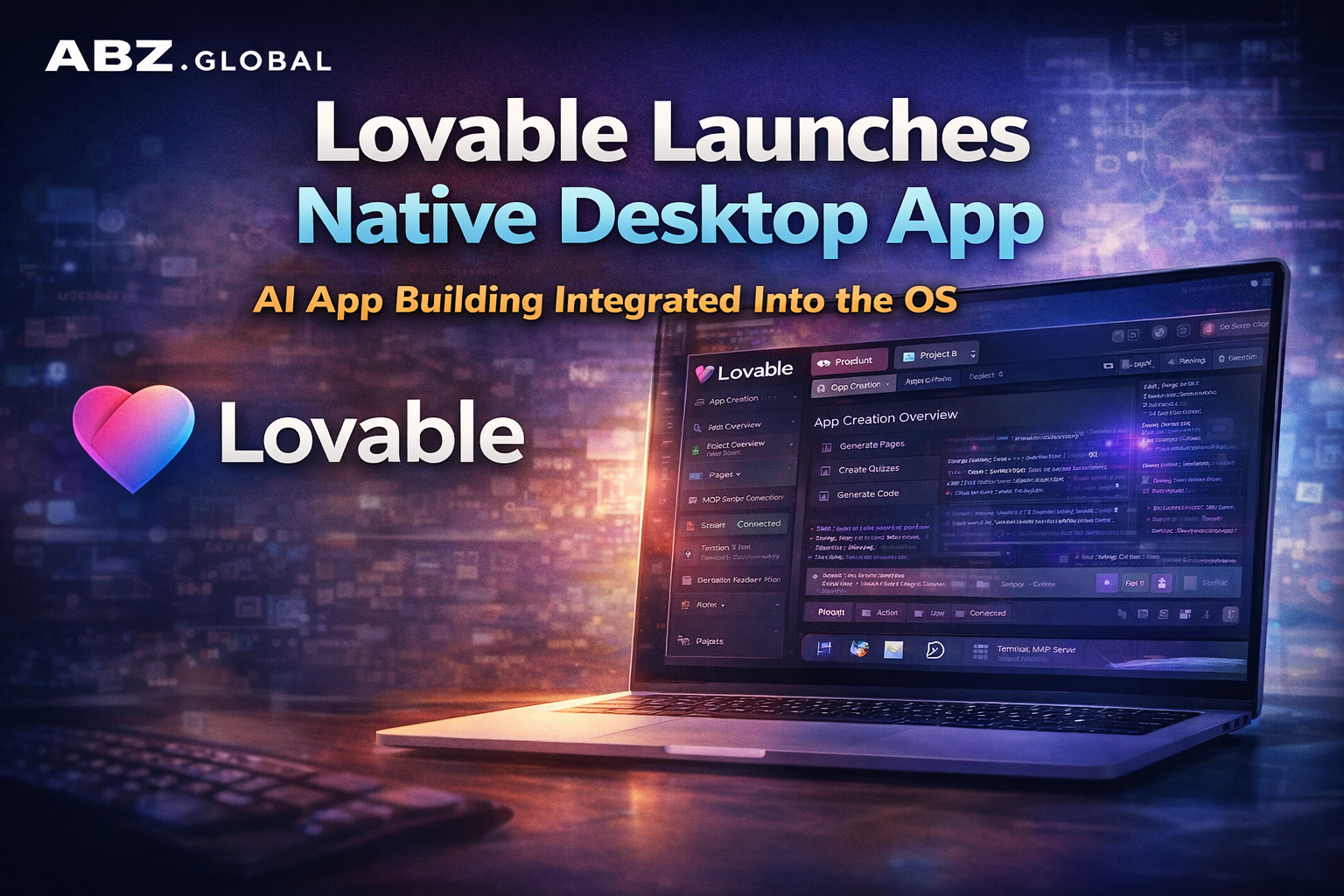
The company now has a native desktop app, starting with macOS, and that matters because AI app-building tools are moving beyond the browser and closer to the operating system itself. According to Lovable’s desktop documentation, the app is available now on macOS, Windows support is coming soon, and the desktop version adds local MCP server support, multi-project tabs, and keyboard shortcuts on top of the existing web experience.
That is a meaningful product shift.
Browser-based AI tools are useful, but native desktop products usually feel faster, more present, and more integrated into how people actually work. Lovable is clearly pushing in that direction by letting users keep multiple projects open in tabs, move through workflows with keyboard shortcuts, and connect to local tools running directly on their machine.
What Lovable is adding
Lovable’s desktop documentation says the app includes three core upgrades over the web version.
The first is local MCP support. This allows Lovable to connect to tools running on the user’s machine, not just cloud services. Lovable specifically points to local MCP use cases such as Figma Desktop and Paper, where the agent can read design files, inspect components, and use that context while building an app.
The second is multi-project tabs. That sounds simple, but it is a strong workflow feature. One of the annoying parts of browser-based builders is juggling separate windows, switching tabs, and losing track of what belongs to which product. Native multi-project tabs make Lovable feel more like a serious work environment and less like a single prompt box.
The third is native keyboard shortcuts. Lovable lists shortcuts for opening menus, creating tabs, switching between tabs, opening the current page in a browser, zoom controls, and preferences. This is exactly the kind of detail that helps a tool become part of a daily build workflow rather than something people use only occasionally.
Why this matters
This launch is important because the AI builder market is becoming more competitive and more mature.
The first phase of the market was about proving that prompt-to-app actually works. The next phase is about depth, speed, integration, and control. Tools that stay trapped in a browser may still be useful, but desktop integration creates a stronger sense of continuity with the rest of a builder’s environment. That matters for founders, designers, product people, and developers who want AI close to their real files, tools, and workflows. This conclusion is an inference based on Lovable’s move to local MCP connections and device-level capabilities.
It also fits a broader trend in AI software.
The best products are no longer just chat interfaces. They are becoming execution environments. Lovable’s own Desktop App Terms show this more clearly than most marketing pages. The company explicitly describes local file actions, device access features, local application connections, and MCP-based links to third-party tools, while also warning users that AI-driven file actions may happen without a separate confirmation step.
That is a serious signal.
Lovable is not just trying to answer questions about app building. It is trying to participate more directly in the act of building itself.
The strategic angle
For Lovable, a desktop app is not only a convenience feature.
It is a positioning move.
Native presence makes the product feel more substantial. Local integrations make it more capable. Keyboard-first workflows make it more habitual. Together, those changes help Lovable compete not just as a fast prototype generator, but as a more persistent AI workspace for turning ideas into working software. This is an inference from the feature set Lovable has published for the desktop app.
It may also help Lovable appeal to more advanced users.
A lot of non-technical founders like the speed of AI builders, but more technical users often want better control, more context, and tighter integration with the tools they already use. Local MCP support is exactly the sort of feature that can make an AI builder feel more credible to that audience.
Final take
Lovable launching a native desktop app is bigger than it looks.
On the surface, it is a product expansion to macOS. In reality, it is part of a larger shift in AI software, where the winning tools will likely be the ones that move closer to the operating system, closer to local context, and closer to real execution. Lovable’s desktop release puts it more firmly in that direction.
The browser is still important.
But increasingly, the serious AI products are trying to become part of the machine itself.
And that is where this market gets more interesting.