
How Is Fiverr Looking for Freelancers in 2026?
Fiverr always felt different from Upwork.
Less proposals.
Less back-and-forth.
More “productized” work.
You list a service.
Clients find you.
They buy.
That core model still exists in 2026.
But just like Upwork, Fiverr has changed.
It is still one of the biggest freelance platforms in the world.
Still full of opportunity.
Still capable of generating serious income.
But it is also more competitive, more algorithm-driven, and more dependent on positioning than ever before.
And just like everywhere else:
Some freelancers are winning big.
Others are invisible.
Fiverr is still growing — but it is more algorithm-driven
Fiverr has always been about visibility.
But in 2026, this is even more true.
The platform is heavily driven by:
search ranking
click-through rate
conversion rate
review quality
delivery performance
That means Fiverr behaves less like a marketplace and more like a search engine for services.
And that changes everything.
Because success is no longer about just being good.
It is about:
being seen → being clicked → being bought
If you fail at the first step, nothing else matters.
The biggest shift: Fiverr is now a product marketplace
This is the most important concept to understand.
Fiverr is not a freelancing platform in the traditional sense.
It is a product marketplace disguised as freelancing.
Clients don’t think:
“Let me find a freelancer.”
They think:
“Let me buy a service.”
That means your gig is not a profile.
It is a product listing.
And in 2026, this matters more than ever.
Winning freelancers treat Fiverr like:
e-commerce
SaaS landing pages
conversion funnels
Not like a job board.
AI made Fiverr faster — and more brutal
AI has had a huge impact on Fiverr.
But again, not in a simple way.
AI is not killing Fiverr.
It is accelerating it.
Clients now expect:
faster delivery
higher quality
better communication
more value per dollar
Because they know AI exists.
And they assume you are using it.
That changes expectations.
A task that used to take 3 days:
Now expected in 1 day.
A $50 service:
Now expected to feel like $150 value.
This creates pressure.
But also opportunity.
Because freelancers who use AI well can:
deliver faster
handle more volume
increase margins
While others fall behind.
Fiverr competition is extremely visible
On Upwork, competition is hidden inside proposals.
On Fiverr, competition is public.
Clients see:
multiple sellers
pricing differences
reviews
delivery times
portfolios
Side by side.
That creates a different kind of pressure.
You are not just competing.
You are being compared instantly.
That means small differences matter:
better thumbnail
clearer title
stronger positioning
better reviews
These small details decide who gets the click.
The middle-tier problem exists here too
Just like on Upwork, the middle is disappearing.
On Fiverr, this is even more visible.
Low-end sellers:
compete on price
use volume
target basic tasks
Top sellers:
charge premium
build strong brands
get repeat clients
dominate niches
The middle sellers:
not cheap enough
not differentiated enough
not visible enough
They struggle the most.
And many get stuck.
Your gig is your business
This is a mindset shift many freelancers still miss.
Your Fiverr gig is not just a listing.
It is your business front page.
Everything matters:
title
thumbnail
description
pricing structure
packages
FAQs
reviews
Top freelancers obsess over these.
Because they understand something simple:
Traffic without conversion is useless.
And Fiverr rewards conversion heavily.
Reviews are more powerful than ever
Social proof has always mattered.
In 2026, it is critical.
Because:
clients trust reviews more than descriptions
Fiverr’s algorithm rewards strong performance
repeat orders boost visibility
This creates a compounding effect.
More good reviews → more visibility → more orders → more reviews.
And the opposite is also true.
That is why early momentum matters so much.
And why consistency matters even more.
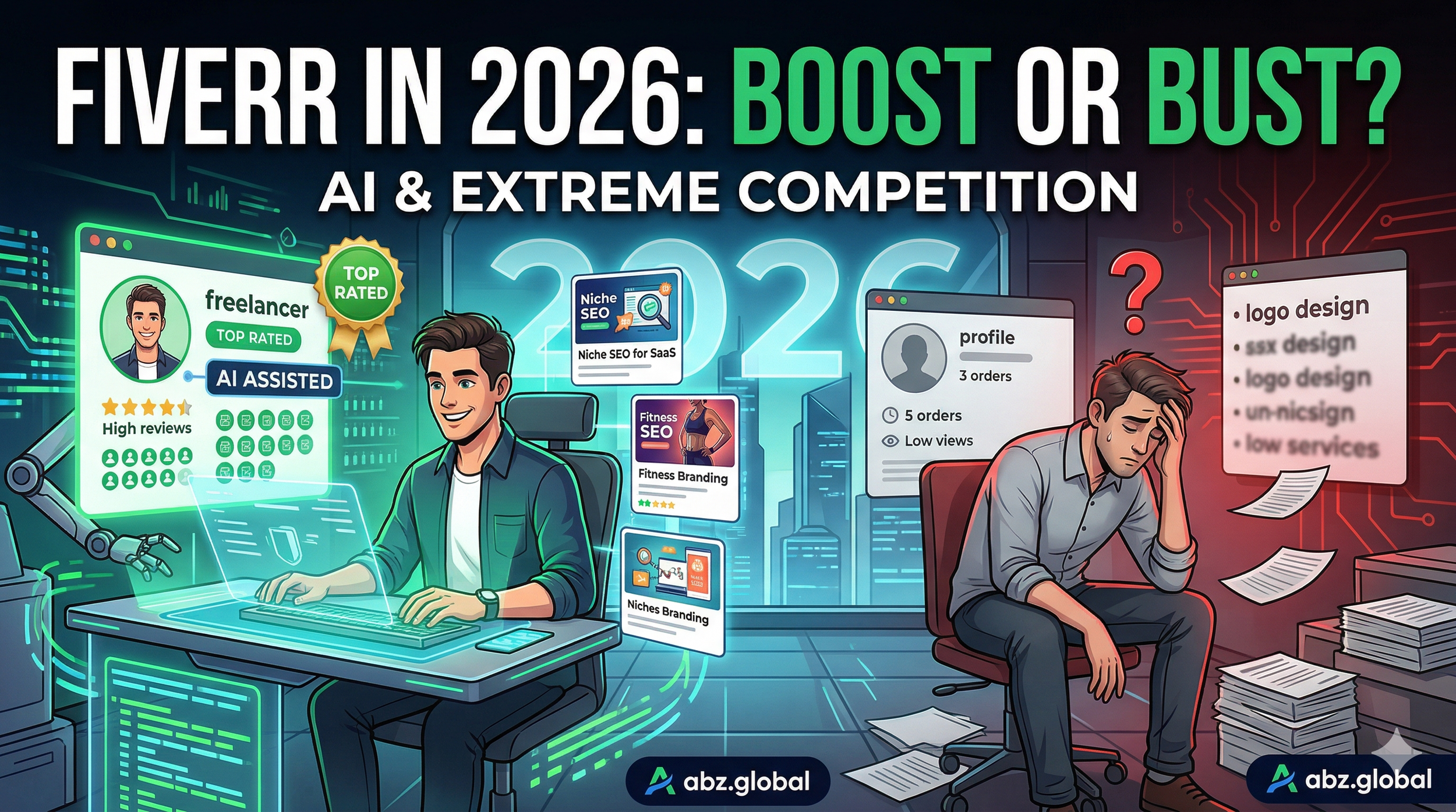
Niches win on Fiverr
General gigs struggle.
Niche gigs win.
Instead of:
“I will design a logo”
Winning gigs look like:
“I design logos for SaaS startups”
“I create branding for fitness coaches”
“I design packaging for beauty brands”
This works for a simple reason:
Clients want relevance.
They don’t want “a designer.”
They want:
someone who understands their world.
And Fiverr’s search system rewards that clarity.
Speed is a competitive advantage
Fiverr is fast.
Clients expect quick responses.
Quick delivery.
Quick revisions.
Speed is not just a nice-to-have.
It is a ranking factor.
Freelancers who:
respond quickly
deliver on time
communicate clearly
Win more.
And over time, they dominate their categories.
Pricing strategy matters more than price
Many freelancers think Fiverr is a race to the bottom.
That is not entirely true.
Yes, low prices exist.
But high-value sellers are thriving.
The difference is not price.
It is perceived value.
Top freelancers:
structure packages clearly
show strong portfolios
communicate outcomes
build trust quickly
So they can charge more.
While others compete on price and struggle.
Fiverr is becoming more brand-driven
Another interesting shift:
Top freelancers are building brands.
Not just gigs.
They have:
consistent style
clear messaging
recognizable positioning
Clients remember them.
Return to them.
Recommend them.
This is where Fiverr starts to look less like a marketplace and more like a personal brand platform.
Repeat clients are the real asset
The biggest mistake new freelancers make:
Focusing only on new orders.
The real money on Fiverr comes from:
repeat clients
long-term relationships
upsells
Because:
Acquiring a new client is expensive (in time and effort).
Serving an existing client is much easier.
Top freelancers understand this.
And they build their gigs and communication around it.
The real opportunity is still massive
Despite all the competition, Fiverr is still full of opportunity.
Because:
small businesses are growing
online brands are scaling
content demand is exploding
AI is creating new service categories
There are more buyers than ever.
But again:
Not everyone captures that demand.
So how is Fiverr looking in 2026?
The honest answer is:
Fiverr is faster than ever.
More competitive than ever.
More algorithm-driven than ever.
And more rewarding than ever — for the right freelancers.
It rewards:
clarity
positioning
speed
consistency
strong offers
And it punishes:
generic gigs
weak presentation
slow response
poor delivery
Final thought
Fiverr in 2026 is not about freelancing.
It is about productizing your skill.
If you treat your gig like a product:
You can win.
If you treat it like a profile:
You will struggle.
The opportunity is still there.
But just like everywhere else:
It belongs to the freelancers who understand how the game has changed.