
Claude Managed Agents Shows the AI Agent Race Is Becoming an Infrastructure Race
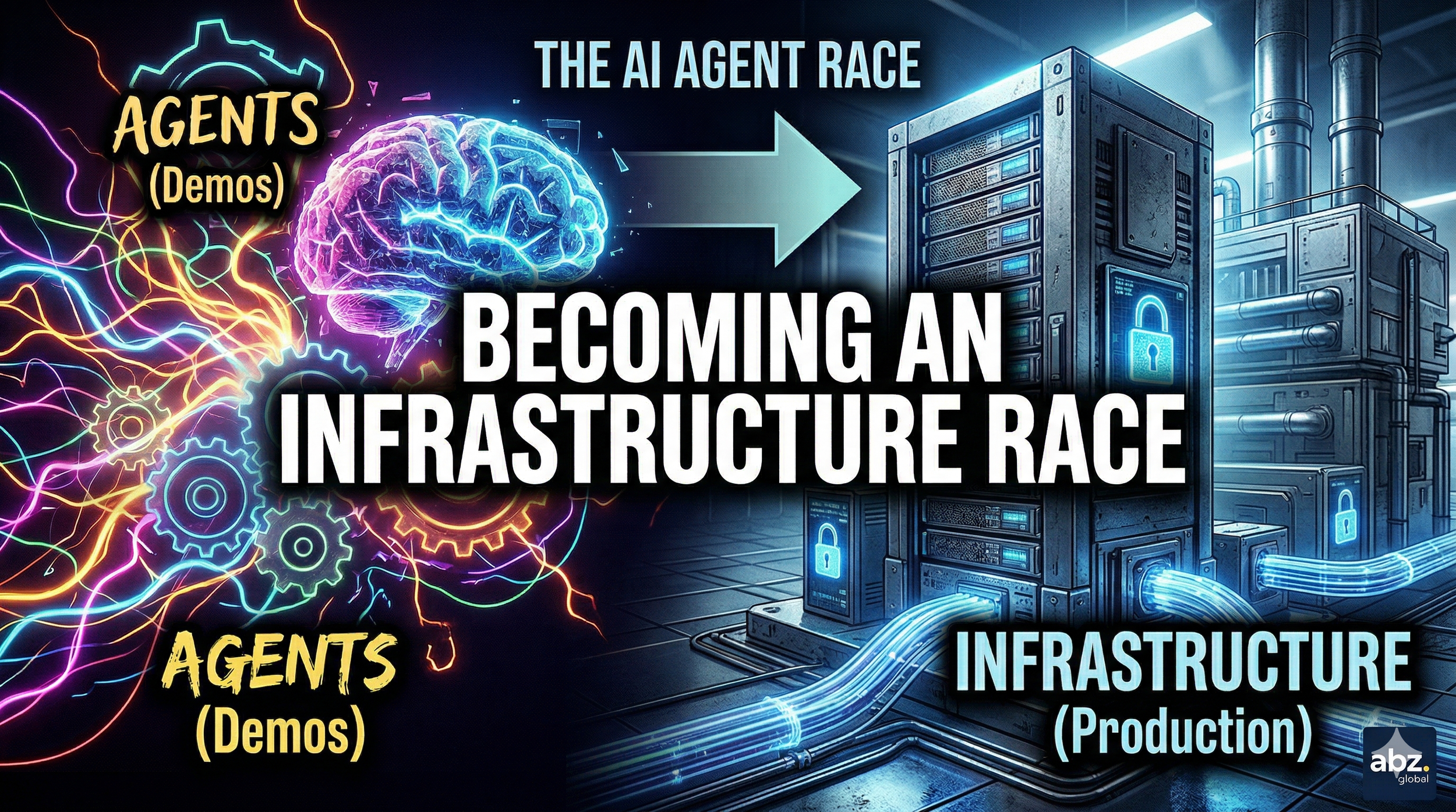
For the last year or two, a lot of the AI agent conversation has been driven by demos.
Agents that browse.
Agents that code.
Agents that research.
Agents that plan.
Agents that chain tools together and look impressively autonomous for a few minutes on stage.
That phase mattered.
It proved that agentic software was not just a theory.
But it also created a distorted picture of where the real bottleneck was.
The bottleneck was never only whether a model could act like an agent.
The harder problem was always what happens after the demo, when a company tries to ship that agent inside a real product with real users, real permissions, real workflows, real security constraints, and real uptime expectations. Anthropic’s new Claude Managed Agents announcement makes that point very clearly. It presents Managed Agents as a suite of composable APIs for building and deploying cloud-hosted agents at scale, and frames the main pain points as infrastructure, state management, permissioning, orchestration, and production operations rather than pure model quality alone. (Claude)
That is why this announcement matters more than it may look at first glance.
Claude Managed Agents is not just another feature.
It is a signal about where the agent market is going next.
The first wave of AI agents was about possibility
The first wave of the agent market was mostly about proving that agents could work at all.
Could a model use tools?
Could it hold context across steps?
Could it recover from errors?
Could it pursue a goal rather than just answer one prompt?
Could it look less like a chatbot and more like a software worker?
Those questions drove a huge amount of attention.
And for good reason.
The industry needed that phase.
It needed to see agents writing code, opening pull requests, summarizing research, filling in spreadsheets, generating slides, and handling multi-step tasks. That created the sense that the software industry was moving toward something much bigger than chat.
But demo-phase markets often hide the operational truth.
A clever prototype can make almost anything look close to production.
Real deployment is where the pain begins.
That is exactly the gap Anthropic is now trying to target.
Anthropic is selling relief from the ugly parts
The smartest way to read Claude Managed Agents is not “Anthropic launched agent APIs.”
The smarter way to read it is this:
Anthropic is trying to productize the ugly parts of agent deployment.
Its announcement says shipping a production agent requires sandboxed code execution, checkpointing, credential management, scoped permissions, and end-to-end tracing, and that this can take months of infrastructure work before a team ships anything users actually see. Anthropic is positioning Managed Agents as the answer to that burden by handling the runtime complexity on its own infrastructure. (Claude)
That is strategically important.
Because once a market moves from excitement to implementation, the company that removes operational pain can become more important than the company that merely had the early wow factor.
In other words, Anthropic is not only saying Claude is capable.
It is saying: let us handle the runtime, governance, execution environment, and orchestration layer too.
That is a bigger ambition.
This is a move from intelligence alone to intelligence plus runtime
A lot of AI discussion still treats model intelligence as the whole product.
That was already incomplete.
And with agents, it becomes even more incomplete.
A model can be brilliant in a benchmark, impressive in a chat window, and still be painful to ship in production if the rest of the system is fragile.
Agent products need more than intelligence.
They need memory behavior that does not collapse.
They need tool invocation that does not become chaotic.
They need recoverability when something fails halfway through a workflow.
They need permissions that do not scare enterprise buyers.
They need traceability so teams can understand what happened.
They need sessions that can last longer than one clean interaction.
They need a stable operating layer.
Anthropic is trying to turn that operating layer into a product category. The announcement emphasizes secure sandboxing, long-running autonomous sessions, built-in orchestration, scoped permissions, identity management, execution tracing, and even multi-agent coordination in research preview. (Claude)
That is not just a tooling update.
That is a platform move.
The agent race is becoming an infrastructure race
This is the core thesis.
The AI agent race is no longer only about who has the smartest agent.
It is increasingly about who can make agents deployable, governable, debuggable, and scalable.
That is a different competition.
And it is a more serious one.
Anyone can be impressed by a well-produced demo.
Far fewer teams can successfully run agent systems inside real organizations without spending enormous time building custom infrastructure around them.
That difference creates a new source of value.
The winners of the next phase may not be only the companies with the best models.
They may be the companies that make production agent systems feel boring enough to trust.
That is what Anthropic is trying to do here.
To many people, “boring” sounds unexciting.
But in infrastructure markets, boring is a compliment.
Boring means reliable.
Boring means standardized.
Boring means governed.
Boring means something an enterprise can actually deploy.
Anthropic wants to own more than the model layer
One of the most interesting parts of this announcement is what it suggests about Anthropic’s long-term ambition.
This is not just about selling access to Claude.
It is about selling the environment around Claude.
Anthropic says Managed Agents is purpose-built for Claude, with an agent harness tuned for performance and designed to improve outcomes with less effort. It also says that in internal testing around structured file generation, Managed Agents improved task success versus a standard prompting loop, and that session tracing, analytics, and troubleshooting are built directly into the Claude Console. (Claude)
That is important because it means Anthropic is not satisfied with being only a model provider.
It wants to be the production substrate for agentic software.
That changes the shape of its moat.
A pure model moat can erode if competitors catch up on intelligence.
A runtime and infrastructure moat is stickier.
If developers build their agent workflows on your orchestration layer, your permissions model, your tracing tools, your session handling, your console, and your operational assumptions, then switching becomes harder.
This is how platforms deepen.
The real market shift is from prototype energy to production demand
The bigger context here is that the market itself is maturing.
Last year, many teams were still in exploration mode.
This year, more teams want to ship.
And once teams want to ship, their questions change.
They stop asking only:
Can the model do something cool?
They start asking:
Can we control it?
Can we inspect it?
Can we trust it with real systems?
Can it run for a long time?
Can it operate under permissions?
Can our engineers support it without building half the stack themselves?
Can we launch this in weeks instead of spending a quarter on infrastructure?
Anthropic is aiming directly at that mindset. Its announcement repeatedly contrasts months of bespoke engineering work with a faster path to production, saying teams can go from prototype to launch in days rather than months. It also backs that up with customer examples that emphasize shipping advanced capabilities much faster than they otherwise could have. (Claude)
That is how you know the market is moving out of the toy phase.
The demand is no longer only for capability.
It is for capability that can survive contact with reality.
The partner list makes the story more serious
Another reason this announcement matters is that Anthropic did not launch it in a vacuum.
It paired the release with a list of recognizable teams and product contexts.
The examples matter because they show how Anthropic wants the market to think about Managed Agents.
Not as a hacker tool.
Not as a novelty.
But as infrastructure for serious software products.
Anthropic highlights use cases from companies including Notion, Rakuten, Asana, Vibecode, Sentry, and Atlassian. The examples span coding flows, AI teammates inside projects, enterprise specialist agents, debugging agents that write patches and open pull requests, and workspace-native delegation of open-ended tasks. The repeated message is speed to production and reduced operational overhead. (Claude)
That partner framing does two things.
First, it tells developers this is meant for real deployment.
Second, it tells the broader market that Anthropic wants to become part of the backend for the next generation of SaaS-native agent experiences.
That is a strong position if it works.
This is especially relevant for SaaS companies
For SaaS companies, Claude Managed Agents should be read as a direct invitation.
It says, in effect:
You do not need to build the whole agent stack yourself.
You can focus on the product layer.
That matters because many SaaS teams are not trying to become infrastructure companies.
They are trying to improve their product.
If they want to add agentic behavior, they usually want the behavior itself, not the burden of building sandboxing, tracing, checkpointing, permissions, long-running sessions, and orchestration from scratch.
That is where Anthropic is trying to insert itself.
And if it succeeds, the result could be a new layer of dependence.
A lot of SaaS products may end up feeling like they built their own agents, while underneath they are actually running on Anthropic’s managed runtime assumptions.
That is how platform capture often works.
The customer sees your product.
The product team quietly depends on someone else’s infrastructure.
Managed agents may become more important than standalone chat
This is another reason the announcement matters strategically.
Standalone chat is visible.
It gets attention.
It shapes public perception.
But managed agent infrastructure may end up being more economically important than consumer chat interfaces in many enterprise contexts.
Why?
Because enterprise value is often created in workflows, not in open-ended conversation.
A company does not only want a chatbot that sounds smart.
It wants systems that can take tasks, use tools, operate under constraints, and return useful outputs inside existing workflows.
That is where the money is often larger.
And that is where infrastructure matters more.
If Anthropic can become the default managed agent layer behind business software, it may gain leverage that is quieter than consumer mindshare but potentially more durable.
That is the kind of move that can look understated at launch and much bigger in hindsight.
This also says something about the future of AI moats
A lot of people still think AI moats will come mostly from raw model quality.
That matters, of course.
But it may not be enough.
As the market evolves, AI moats may come from combinations like these:
Model quality plus workflow integration.
Model quality plus governance.
Model quality plus developer tooling.
Model quality plus deployment infrastructure.
Model quality plus runtime reliability.
Claude Managed Agents points directly in that direction.
It suggests that the future winners in AI may not just be the companies that make models smarter.
They may also be the companies that make agent systems easier to trust, easier to operate, easier to inspect, and easier to ship.
That is a different kind of leverage.
And in many enterprise markets, it may prove stronger than benchmark bragging rights alone.
Anthropic is trying to make agents feel operationally normal
That may be the deepest implication of the launch.
Anthropic wants agents to feel less like experimental systems and more like normal production software components.
That is a very big shift.
Because once agents become operationally normal, adoption can accelerate.
The fear drops.
The complexity drops.
The time-to-value drops.
And teams stop treating agents as a special moonshot project.
They start treating them as a standard feature layer.
That is where real market expansion happens.
The companies that help normalize that transition can become central very quickly.
Anthropic clearly sees that opportunity.
And Claude Managed Agents is one of the clearest signs yet that the company wants to compete not only at the intelligence layer, but at the implementation layer too.
Final thought
Claude Managed Agents is not just another announcement in the endless stream of AI product launches.
It is a strategic signal.
It signals that the AI agent market is moving beyond proving that agents can work.
Now the race is about who can make agents production-ready.
Who can make them governable.
Who can make them durable.
Who can make them easy enough to ship that product teams stop spending months building the same infrastructure over and over again.
Anthropic is trying to become one of the default answers to that problem.
And if that works, this launch will matter for a bigger reason than most first reactions suggest.
It will mean the agent market is growing up.
Not by becoming more magical.
But by becoming more operational.