
Why Fuel Prices Rose Around the World After the U.S. and Israel Attacks on Iran
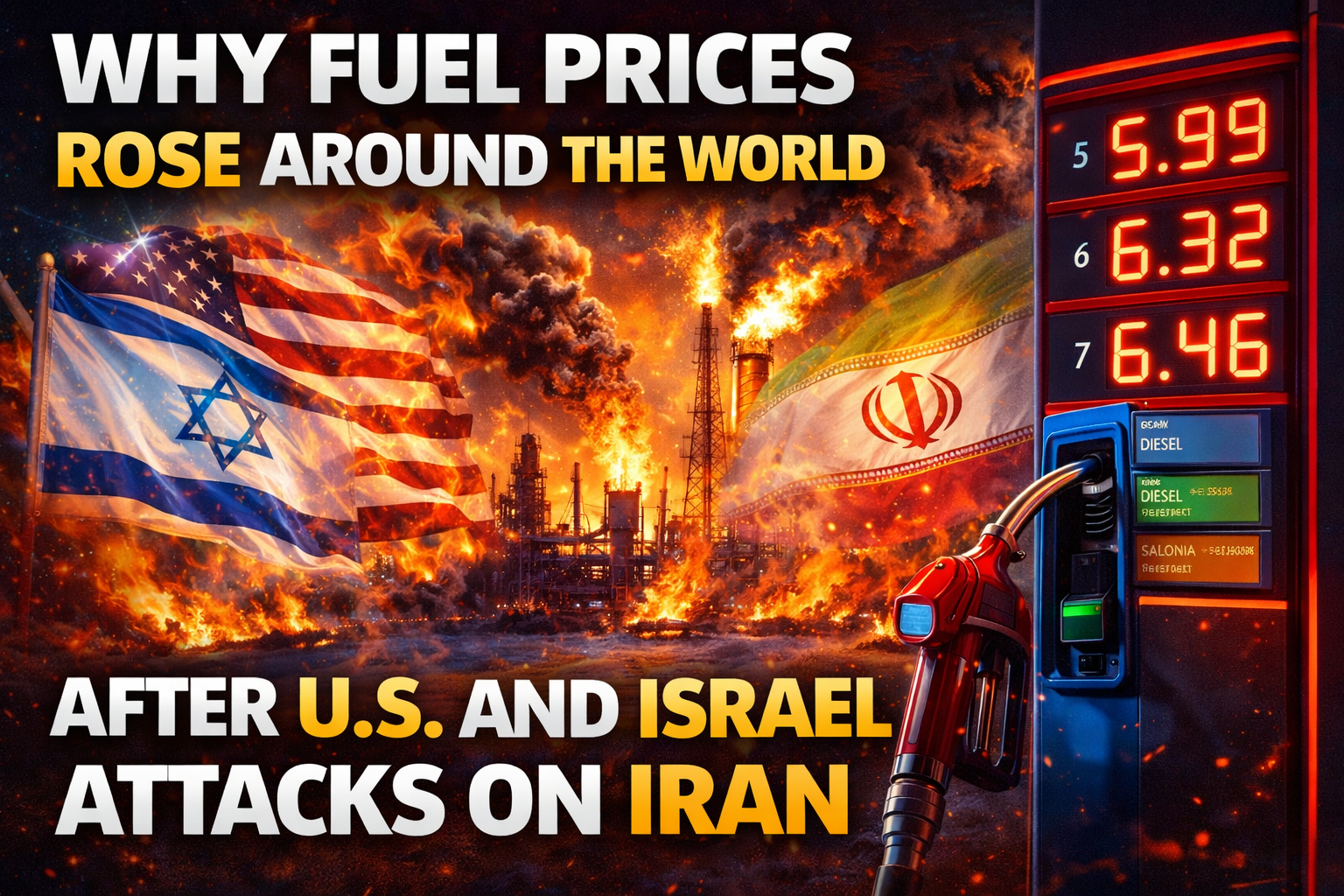
Fuel prices rose around the world after the U.S. and Israel attacks on Iran because global energy markets immediately started pricing in a higher risk of oil supply disruption.
The key point is simple: even before a full physical shortage happens, oil traders react to the possibility that a major producer, a major export route, or regional shipping flows could be disrupted. That pushes crude oil prices higher first, and then gasoline, petrol, and diesel prices start following. Reuters reported that Brent crude surged sharply during the escalation, while the IEA said hostilities had already pushed oil and gas prices materially higher through March 9.
The biggest reason: fear of supply disruption
Oil prices are not driven only by what is happening today. They are also driven by what traders think could happen next.
When the conflict around Iran intensified, the market immediately started worrying about lost barrels from the Gulf, reduced exports, and a wider regional energy shock. Reuters reported that disruptions and fears tied to the conflict pushed oil to its highest level since January 2025, and Wood Mackenzie warned that a severe Gulf shutdown scenario could remove around 15 million barrels per day from the market.
That kind of risk matters because oil is globally traded. If traders think supply could tighten, the price does not wait for gas stations to run dry. It moves almost instantly.
The Strait of Hormuz matters enormously
A big part of the fear is tied to the Strait of Hormuz, one of the most important energy chokepoints in the world.
The IEA says a closure or major disruption there would have a huge impact because the Strait is the exit route for roughly a quarter of global oil supply and a large share of LNG flows. In its current Middle East market coverage, the IEA also noted that Brent had climbed by 35% through March 9 and that refined products such as diesel and jet fuel were especially affected.
So even if bombs do not hit every oil field directly, the mere threat to the route that carries so much of the world’s oil is enough to push prices up fast.
Shipping, insurance, and logistics also got hit
Another reason fuel prices moved higher is that war does not only threaten production. It also threatens transport.
Reuters reported that tankers and container ships were avoiding the Strait of Hormuz, insurance was being canceled in some cases, and shipping rates were soaring. That means the cost of moving oil and refined fuels rises even before any formal long-term shortage appears.
This is why the shock spreads globally. A country does not have to buy oil directly from Iran to feel the effect. If the cost and risk of moving oil through the region rise, benchmark prices and freight costs can increase for everyone.
Why pump prices react even in countries far away
Some people think fuel should only get more expensive in the Middle East or nearby countries. That is not how the oil market works.
The U.S. Energy Information Administration explains that gasoline prices generally follow crude oil prices and can change rapidly when crude supply, refinery operations, or fuel delivery systems are disrupted. It also notes that available supply relative to expected demand is what matters.
In other words, if Brent crude jumps because the market fears a Middle East supply shock, drivers in Europe, Latin America, Asia, and even North America can all feel it.
Reuters also reported direct examples of this spillover. In Brazil, diesel costs jumped because the conflict lifted global oil prices, even though Petrobras had not officially reset prices yet.
Diesel often gets hit hard too
This is not only a petrol or gasoline story.
The IEA specifically noted that some oil products were hit harder than crude itself, especially diesel and jet fuel. Reuters also reported that during the surge, U.S. diesel jumped around 10% while gasoline rose nearly 4%.
That matters because diesel flows through the whole economy. It affects trucking, farming, shipping, construction, and industrial activity. So when diesel rises, the impact often spreads beyond drivers and into food, transport, and general inflation.
Why prices sometimes rise faster than they fall
Another reason consumers get frustrated is that pump prices often feel quick to rise and slow to come back down.
Part of that is because oil futures react immediately to new risks, while retail markets adjust through inventories, contracts, refining, and local distribution. The EIA notes that gasoline prices can move quickly when supply expectations change, and broader research it hosts also points to the common pattern that retail prices often respond faster to upstream increases than to decreases.
So even if crude later cools, drivers may not see relief right away.
This was also a broader inflation story
Higher fuel prices matter not only because filling up becomes more expensive, but because energy sits underneath the cost of almost everything else.
Reuters reported that Europe was bracing for an economic hit from the Iran conflict because higher oil prices could lift inflation and weigh on already weak growth. That same logic applies elsewhere too: when fuel rises, transportation, logistics, farming, and production costs all come under pressure.
That is why energy markets get so much attention during geopolitical crises. Fuel is not just another consumer product. It is a core input into the wider economy.
Final verdict
Fuel prices increased around the world after the U.S. and Israel attacks on Iran because the market rapidly priced in the risk of a broader oil shock.
The real drivers were fear of lost supply, fear of disruption in the Strait of Hormuz, higher shipping and insurance risk, and the fact that gasoline, petrol, and diesel prices around the world are tied closely to global crude benchmarks. Reuters and the IEA both showed that oil and refined fuel markets reacted sharply as the conflict escalated.
So the short answer is this:
Fuel prices rose not only because oil was lost immediately, but because the world feared that much more could be lost next.
That is how global energy markets usually react to wars in one of the most important oil-producing regions on Earth.