
What Is the Strait of Hormuz - And Why Do You Hear About It Every Time Fuel Prices Rise?
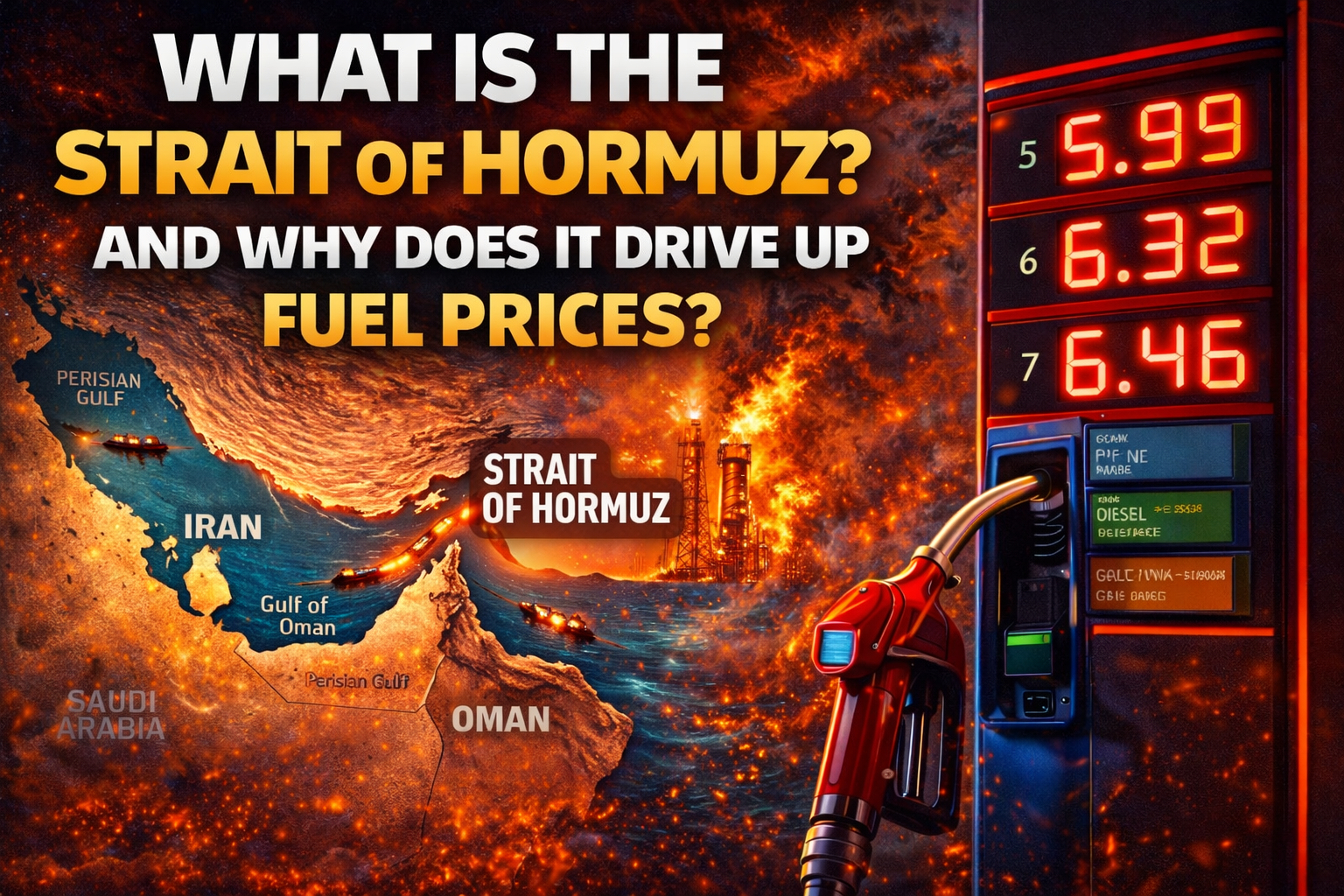
The Strait of Hormuz is a narrow waterway between Iran and Oman that connects the Persian Gulf to the Gulf of Oman and the Arabian Sea.
On a map, it may look like just one small passage. In the real world, it is one of the most important energy chokepoints on Earth.
That is why you hear about it so often whenever fuel prices jump.
Why this place matters so much
The short answer is simple:
A huge amount of the world’s oil and liquefied natural gas moves through the Strait of Hormuz.
That means when the route looks dangerous, blocked, or even just unstable, the global energy market reacts immediately. Traders start worrying that oil exports could slow down or stop. Once that fear enters the market, crude oil prices usually move higher fast.
And when crude oil rises, petrol, gasoline, diesel, jet fuel, shipping costs, and inflation often rise with it.
Think of it like a narrow bottleneck
The easiest way to understand the Strait of Hormuz is to think of it as a narrow gateway for energy.
A large share of the oil produced by Gulf countries has to pass through this route before it can reach the rest of the world. That includes oil linked to countries such as Saudi Arabia, Iraq, Kuwait, the UAE, Qatar, and Iran.
Because there are only limited alternatives, any military tension, attack, threat to shipping, or tanker disruption there quickly becomes a global market issue.
So even though the strait is geographically small, its importance is enormous.
Why fuel prices react so quickly
Fuel prices do not move only when oil is physically lost.
They also move when markets believe oil could be lost next.
That is why the Strait of Hormuz shows up in so many fuel-price headlines. Even the fear of a disruption can push oil prices higher before a full shutdown happens.
If tankers avoid the route, if insurance becomes more expensive, if navies get involved, or if traders think the conflict might expand, the market starts pricing in more risk right away.
That risk premium then spreads into fuel prices around the world.
Why people far away still feel it
A lot of people assume this should matter only to countries near the Middle East.
But oil is globally priced, which means a disruption risk in one major chokepoint can affect drivers and businesses almost everywhere.
So a driver in Europe, Asia, Latin America, or North America does not need to buy fuel directly from Iran to feel the impact. If the global benchmark price of crude rises because of Hormuz fears, fuel can get more expensive across many countries.
That is why a local conflict can end up affecting the cost of filling a car thousands of kilometers away.
Why it is in the news so much right now
The Strait of Hormuz becomes headline news whenever tensions rise involving Iran, the Gulf, or major powers operating in the region.
The reason is straightforward: markets know this is one of the most sensitive oil routes in the world.
When conflict intensifies, the question is no longer just about politics or military moves. The question becomes:
Could this turn into a global energy shock?
That is exactly why journalists, analysts, traders, and governments keep mentioning the Strait of Hormuz whenever oil prices start climbing.
Is the fear always bigger than the reality?
Sometimes yes.
In some cases, markets react strongly even if the actual physical disruption ends up being smaller than feared. That happens because the Strait of Hormuz is both a real supply chokepoint and a psychological market trigger.
So the fear itself can move prices.
Even if the route is not fully closed, the possibility of disruption is often enough to lift crude oil prices and keep fuel markets nervous.
Final verdict
The Strait of Hormuz is a narrow waterway between Iran and Oman, but in energy terms it is one of the most important places in the world.
You keep hearing about it in fuel-price coverage because so much oil passes through it, and because markets know that any serious disruption there can quickly affect global energy prices.
The simplest explanation is this:
When the Strait of Hormuz looks unsafe, the world starts worrying about oil supply - and that usually pushes fuel prices higher.
That is why it shows up in the news so often, especially during conflict in the Middle East.